Argan Oil
Argan Oil
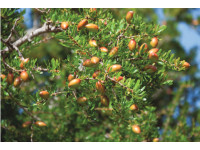
A rich, nourishing oil high in essential fatty acids. It penetrates the skin quickly leaving no oily residue. Good for both moisturising dry skin and balancing an oily skin.
Argan oil contains essential fatty acids and antioxidants such as Vitamin E, Ferulic Acid and Carotenoids. Argan Oil helps to reduce the effects of ageing, sun exposure and pollution.
Argan oil contains tocopherols (vitamin E), phenols, carotenes, squalene, and fatty acids, (80% unsaturated fatty acids) The main natural phenols in argan oil are caffeic acid, oleuropein, vanillic acid, tyrosol, catechol, resorcinol, (−)-epicatechin and (+)-catechin.
Even though argan oil comes from a stone fruit, it may cause an adverse reaction with those who have tree nut allergies.
A very low score on the sensitivity scale, Argan oil is safe to use on the most sensitive skin.
The Phoenicians from 1550 B.C. have recorded the use of Argan Oil by locals to heal and beautify their bodies. In 1510 African explorer Leo Africanus came across the Argan Oil when he was travelling across Morocco where it has been used for centuries as a cosmetic oil to maintain a fair complexion and to cure skin pimples and chicken pox pustules scars.
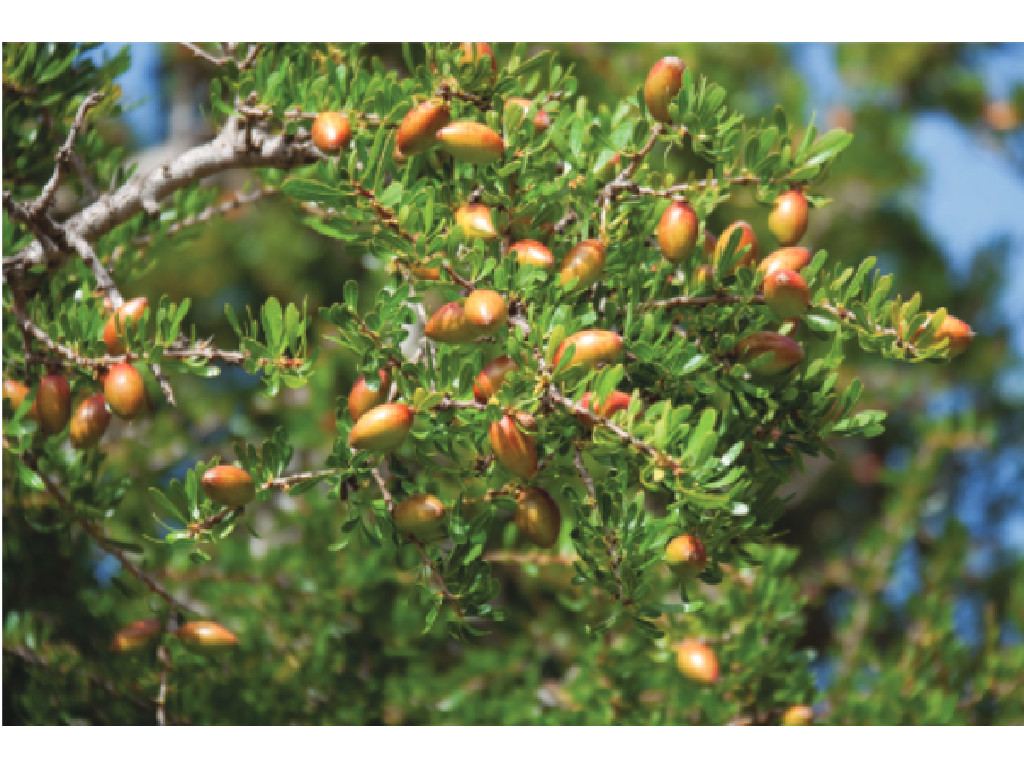
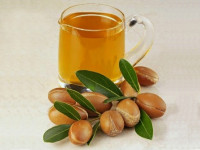
Pictures of Argan Oil