Pomegranate Seed Oil
Pomegranate Seed Oil
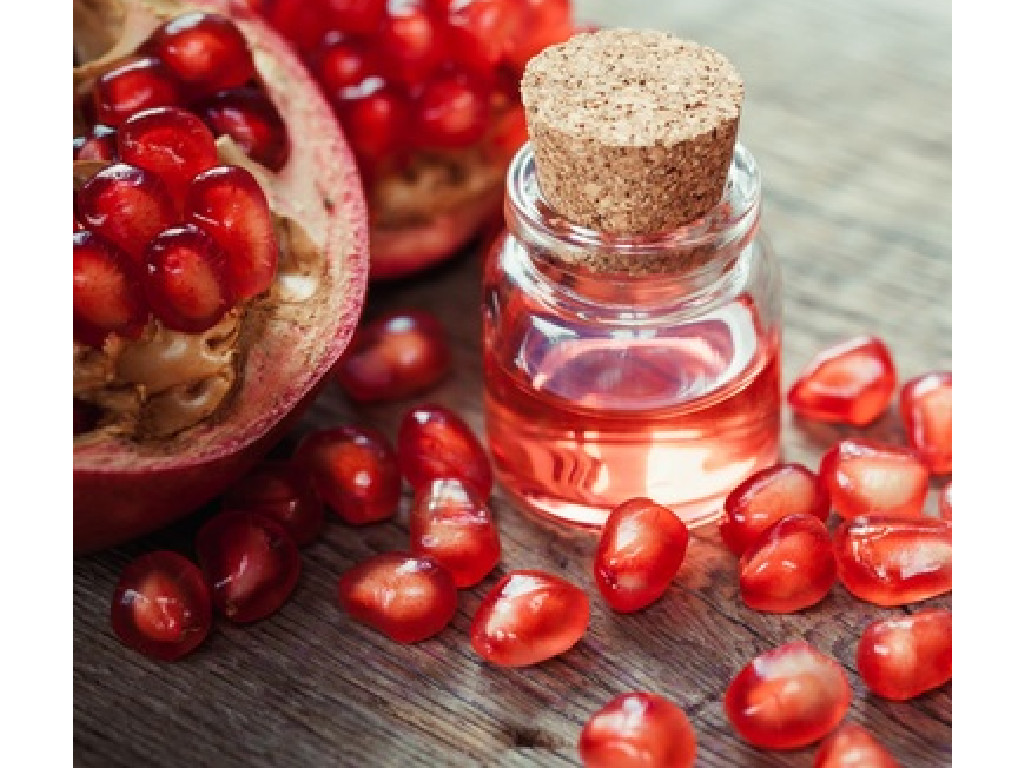
Pomegranate Seed Oil has strong anti-inflammatory and anti-aging properties by helping to fend off free radicals. It also helps unclog pores on the face to help in relieve the symptoms of acne.
Punicic acid has been shown to stimulate keratinocyte proliferation, mild thickening of epidermis and stimulating type I procollagen synthesis
Punicic acid makes up around 65% of the fatty acids in pomegranate seed oil. Punicic acid is a conjugated linolenic acid or CLnA; i.e. it has three conjugated double bonds. It is chemically similar to the conjugated linoleic acids, or CLA, which have two. It has been erroneously classified as "n-5" or "omega-5" polyunsaturated fatty acid because the last double bond is loced five carbons from the terminal "omega" carbon, but the "n-x" notation can only be applied to all cis, methylene-interrupted polyunsaturated fatty acids. In lab rats, punicic acid was converted to the CLA rumenic acid (9Z11E-CLA).
No known allergy information
Scores a very low 1/10 in the Cosmetic Safety Database
Its health-enhancing benefits were used in several medicinal practices. In Ayurveda, it was used to lower fever, and in Greek medicine, it was used to address diabetes. The plant’s roots and bark were used to stop bleeding and dysentery as well as to soothe ulcers. Research studies have shown that Pomegranates also help to maintain good cholesterol levels, support heart health, ease symptoms of menopause, boost immunity, maintain normal blood pressure and healthy joint function, soothe and prevent inflammation, support proper digestion, and maintain healthy skin and teeth.
| Scientific Articles |
|---|
| Pomegranate seed oil: A comprehensive review on its therapeutic effects |
| Oil Characterization and Lipids Class Composition of Pomegranate Seeds |
Pictures of Pomegranate Seed Oil